

Walking your rescue dog should be a peaceful bonding experience, but for many adopters, seeing another dog or person on the sidewalk turns a relaxing stroll into a stressful ordeal.
By understanding the root causes of leash reactivity and using compassionate, positive reinforcement techniques, you can transform your daily Toledo walks from chaotic to calm.
Here at Operation Saves, we frequently take in wonderful, loving dogs who turn into completely different animals the moment a leash is clipped to their collar. They might bark, lunge, spin, or growl at bicycles zooming by in the Toledo Metroparks, or panic when they see a neighbor’s dog across the street. It can be incredibly embarrassing and exhausting for the person on the other end of the leash.
But here is the most important thing to remember: your dog isn’t giving you a hard time; they are having a hard time. Leash reactivity is rarely about true aggression. Most of the time, it stems from fear, anxiety, or overwhelming frustration. If you are struggling with a reactive rescue pup, here are some positive, science-based techniques to help you both find your peace on the pavement.
What is Leash Reactivity (And What It Isn’t)
When a dog is off-leash and encounters something scary, their natural instinct is to rely on their “flight” response and run away. When they are tethered to a six-foot leash, that option is removed. Feeling trapped, they often resort to the “fight” response—lunging and barking to scare the threat away.
Alternatively, some dogs are just “frustrated greeters.” They desperately want to say hello, but the physical barrier of the leash causes their excitement to boil over into frantic barking and pulling. In both cases, the leash acts as a catalyst for big, unmanageable emotions.
The “U-Turn” Technique: Managing Distance
Distance is your best friend when dealing with a reactive dog. Every dog has a “threshold”—the specific distance at which they notice a trigger but are still calm enough to listen to you.
- Observe and Anticipate: Keep your head on a swivel. If you spot a trigger (like another dog) two blocks away, act before your dog reacts.
- The Emergency U-Turn: Instead of tightening the leash and tensing up, cheerfully say “Let’s go!” and abruptly turn 180 degrees to walk in the opposite direction.
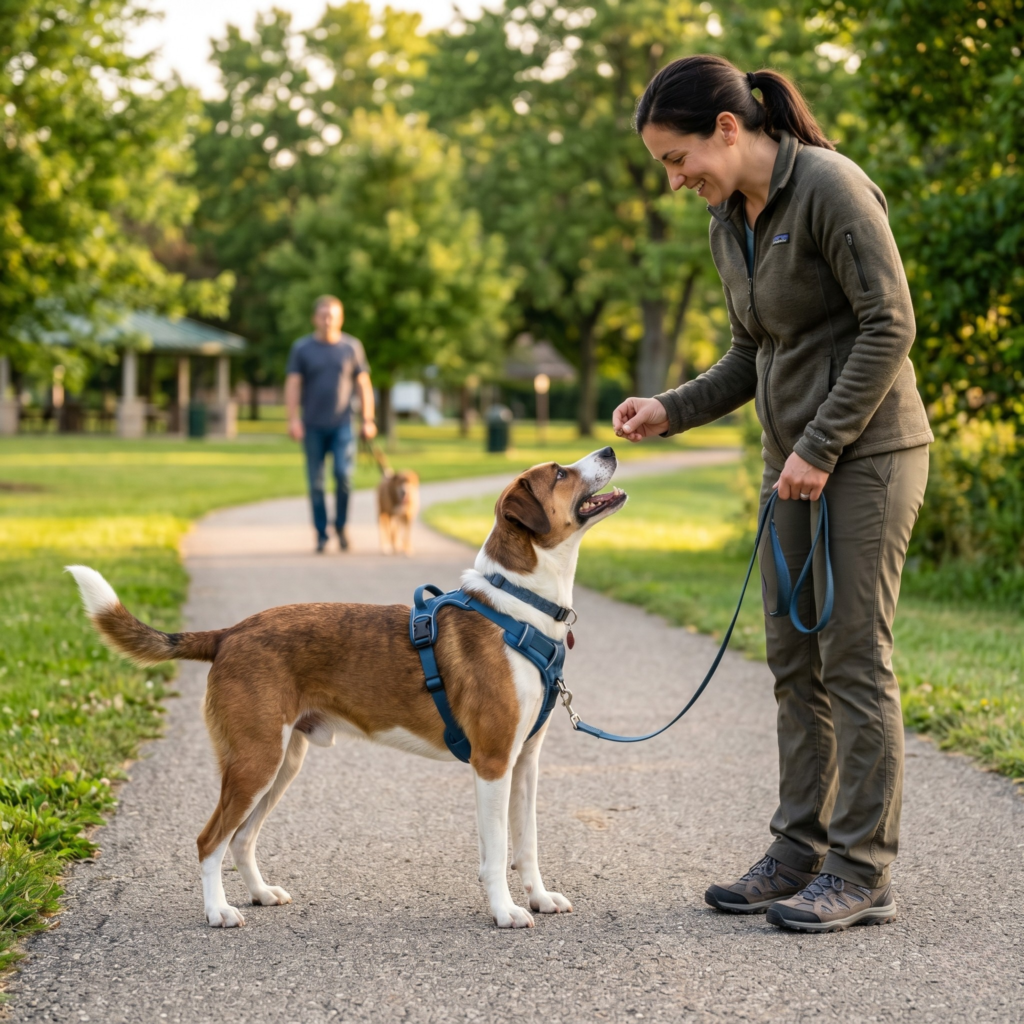
- Reward the Choice: As soon as your dog turns to follow you, praise them heavily and offer a high-value treat. You are teaching them that moving away from scary things is highly rewarding.
The “Look at That” (LAT) Game: Changing Emotional Responses
The goal of positive reinforcement isn’t just to stop the barking; it’s to change how your dog feels about their triggers. The “Look at That” game is a powerful counter-conditioning tool.
- Find the Sweet Spot: Stand at a distance where your dog can see the trigger but isn’t reacting (under threshold).
- Click/Mark and Treat: The exact second your dog looks at the trigger, say “Yes!” (or click a clicker) and immediately feed them a high-value treat like boiled chicken or cheese.
- Change the Narrative: Repeat this every time they look at the trigger. Very quickly, your dog will start looking at the scary dog, and then immediately look back at you expecting a treat. The trigger has now become a predictor of good things!
Gear Matters: Set Yourself Up for Success
The equipment you use can drastically affect your dog’s stress levels and your physical control.
- Ditch the Retractable Leash: Retractable leashes teach dogs that pulling creates forward momentum, and they offer zero control in an emergency. Stick to a standard 4-to-6-foot nylon or leather leash.
- Front-Clip Harnesses: Collars can put dangerous pressure on a lunging dog’s trachea, increasing their panic. A sturdy front-clip harness redirects their forward momentum back toward you without causing pain.
The Operation Saves Mission: Patience in Practice
Rehabilitating a reactive dog requires incredible timing, patience, and emotional control. These are the exact skills we foster in our community outreach programs. When the at-risk youth and individuals with disabilities in our job training program work with our sanctuary dogs, they practice these exact positive reinforcement games. By learning to stay calm, perfectly time a treat, and advocate for a dog’s personal space, our participants are building their own emotional regulation and leadership skills. They learn that with compassion and consistency, behavior can change—a lesson that empowers both the human and the animal.
Ready to Enjoy Your Walks Again?
Training a reactive dog takes time, but every small victory is worth celebrating. If you want to support our mission of rehabilitating dogs and empowering our community, or if you are looking to add a new companion to your life, get involved today!
- View Our Adoptable Dogs to find a furry friend who has been working hard on their leash skills with our youth trainers.
- Submit a Volunteer Application to learn these positive training techniques hands-on at our sanctuary.
- Make a Donation to help us provide high-value training treats, front-clip harnesses, and professional behavioral support for our most vulnerable dogs.
Disclaimer: All potential adopters are subject to an extensive application and approval process to ensure proper placement and care for our animals. The information provided in our blog is for educational purposes and is not a substitute for professional veterinary or certified dog training advice. If your dog’s reactivity is escalating or poses a danger, please consult a certified canine behaviorist.