

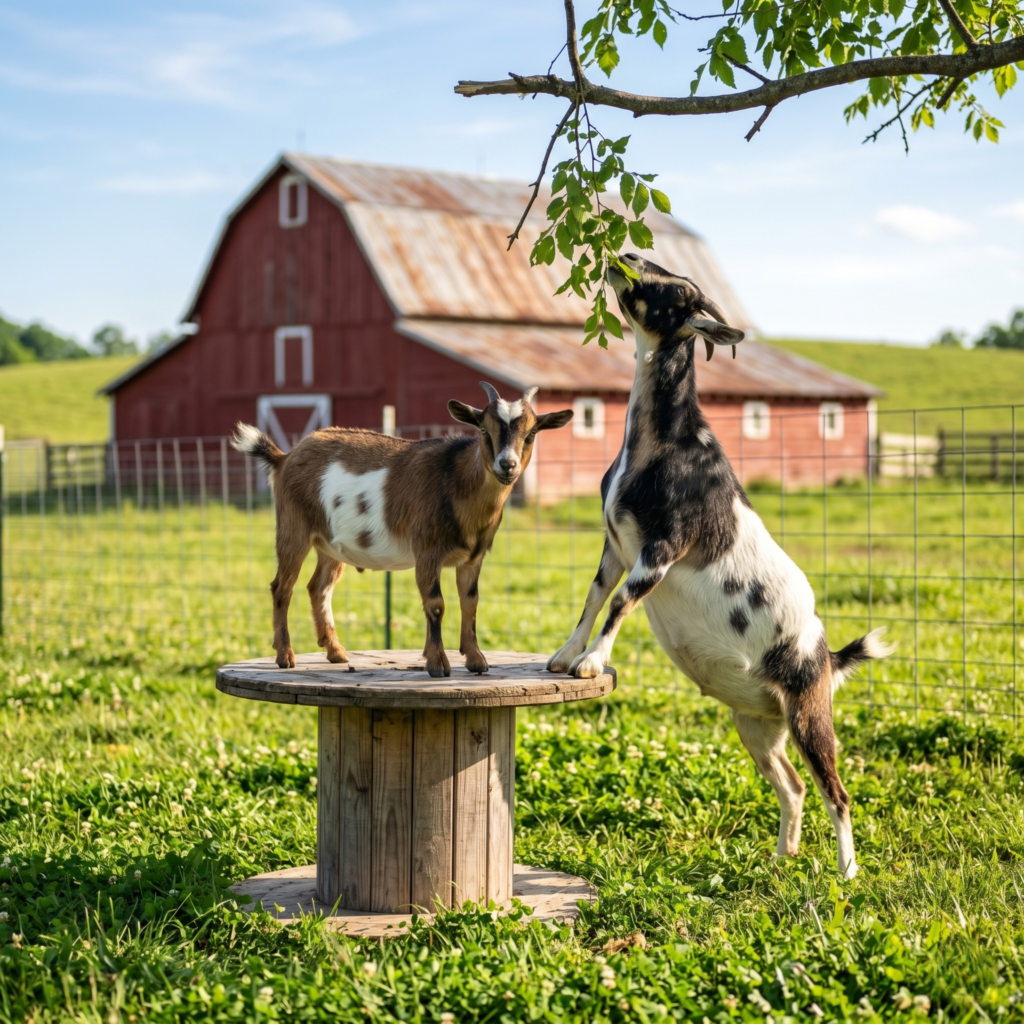
Adding rescue goats to your hobby farm brings endless entertainment, but these intelligent, curious creatures require specific care to truly thrive.
Whether you are an experienced homesteader or setting up your very first pasture here in Northwest Ohio, understanding the fundamentals of goat husbandry is essential for a happy, healthy herd.
Here at the Operation Saves farm sanctuary, goats are a staple of our barnyard family. Often, these incredible animals come to us because previous owners underestimated their needs, their knack for escaping, or the commitment required to keep them healthy. While they are undeniably charming and affectionate, goats are not just “lawnmowers” you can stick in a backyard and forget about.
If you have the space and are considering adopting a rescue goat (or three!), here is our foundational guide to keeping their hooves healthy, their minds engaged, and their hearts full.
Fencing and Shelter: Outsmarting the Escape Artists
Goats are notoriously clever and agile. If there is a weakness in your fence, a goat will find it, exploit it, and likely lead the rest of the herd through it.
- Heavy-Duty Fencing: Standard field fence is often no match for a determined goat who wants to stand on it or rub against it. We recommend 4-foot woven wire fencing with small enough openings that they cannot get their heads (or horns) stuck.
- Draft-Free Shelter: Goats absolutely despise getting wet. Unlike sheep, they do not have a waterproof layer of lanolin in their coats. Here in Toledo, providing a sturdy, draft-free, three-sided shelter packed with dry straw is non-negotiable to protect them from harsh winter winds and spring rains.
Proper Nutrition: Browsers, Not Grazers
A common misconception is that goats will perfectly mow your grass. In reality, goats are browsers, meaning they prefer to eat leaves, weeds, bark, and brush at head-height or higher.
- Forage and Hay: High-quality forage or grass hay should make up the bulk of their diet. Alfalfa can be given as a treat or to nursing does, but too much can cause urinary calculi (stones) in male goats.
- Loose Minerals are Mandatory: Goats require specific loose minerals offered free-choice. Unlike sheep, goats need copper in their diet. Always ensure you are buying a mineral mix formulated specifically for goats, not a generic “all-stock” block.
- Toxic Plants: Before bringing goats home, walk your NW Ohio property and remove highly toxic plants like rhododendron, azaleas, yew, and wild cherry leaves.
Hoof Care: The Foundation of Health
A goat’s hooves are like fingernails; they grow continuously and require regular maintenance.
- Routine Trimming: Depending on the terrain of your pasture, hooves need to be trimmed every 4 to 8 weeks. Overgrown hooves can lead to painful joint issues, lameness, and hoof rot—especially in our muddy Ohio springs.
- Dry Ground: Ensure your goats always have access to a dry, elevated area to stand on to prevent fungal and bacterial infections in their hooves.
Enrichment: Curing Caprine Boredom
Goats are highly intelligent and curious. A bored goat is a destructive goat. Providing mental and physical enrichment keeps them happy and saves your fences!
- Climbing Structures: Goats have a natural instinct to seek high ground. Repurposed wooden wire spools, sturdy wooden platforms, or even large, secure rocks make excellent jungle gyms.
- Scratching Stations: Fasten stiff push-broom heads or repurposed street-sweeper brushes to sturdy fence posts so they can safely satisfy their endless need to scratch.
- Hanging Forage: Instead of tossing branches on the ground, hang them from the fence or a sturdy tree branch to encourage their natural browsing behaviors.
The Operation Saves Mission: Healing Through Husbandry
Caring for our sanctuary goats is one of the most popular and impactful activities for the at-risk youth and individuals with disabilities in our community outreach programs. Working with goats requires patience, physical coordination, and a sense of humor. When our program participants learn to safely trim a hoof, build a new climbing platform, or mix daily grain rations, they are building vital vocational skills and self-esteem. The goats provide a judgment-free space for our community members to learn, grow, and experience the pure joy of animal connection.
Ready to Grow Your Herd?
Goats are incredibly social animals and must always be kept with at least one other goat. If you have the proper setup and are ready to welcome a bonded pair or small herd into your life, we would love to help you find the perfect match!
- View Our Adoptable Animals to see the playful goats currently looking for a pasture to call their own.
- Submit an Adoption Application to start the conversation with our sanctuary team.
- Make a Donation to help us purchase specialized goat minerals, hoof trimmers, and veterinary care for our resident herd.
Disclaimer: All potential adopters are subject to an extensive application and approval process to ensure proper placement and care for our animals. The information provided in our blog is for educational purposes and is not a substitute for professional veterinary advice, especially from a certified large animal or agricultural veterinarian.