

As the humid summer sun beats down on Northwest Ohio, keeping our pets cool becomes a matter of life and death.
By understanding the signs of heatstroke and taking proactive measures, you can ensure your dogs, pigs, and pasture animals stay safe all season long.
Here at Operation Saves, the transition into a sweltering Toledo summer means our daily routines completely change. Because our sanctuary is home to such a diverse population—from highly active rescue dogs to mini horses, goats, and pigs—we have to be hyper-vigilant about the rising temperatures. Heatstroke is a severe, rapidly progressing condition that can cause irreversible organ damage or death in a matter of minutes.
Whether you are walking your dog through the Metroparks or tending to a hobby farm in your backyard, you are your animal’s first line of defense against the heat. Here is our essential guide to recognizing the signs of heat exhaustion and preventing it before it starts.
Know the Signs: Recognizing Heatstroke
Animals do not sweat the same way humans do, making it much harder for them to regulate their core body temperature. It is critical to recognize the early warning signs of heat exhaustion before it progresses to full-blown heatstroke.
- In Dogs: Watch for excessive, frantic panting, thick or ropey drool, bright red or pale gums, glazed eyes, vomiting, and a staggering or drunken gait.
- In Pigs: Pigs cannot sweat at all. If a pig is open-mouth breathing or panting, they are already in dangerous distress. Look for lethargy, refusing to eat, or lying flat out and unresponsive.
- In Horses and Donkeys: Watch for rapid breathing, flared nostrils, excessive sweating (or a sudden, dangerous lack of sweat), and a depressed, drooping head.
Immediate Action: What to Do if You Suspect Heatstroke
If you believe your pet is suffering from heatstroke, you must act immediately to lower their body temperature safely.
- Move to Shade or AC: Immediately get the animal out of the direct sun.
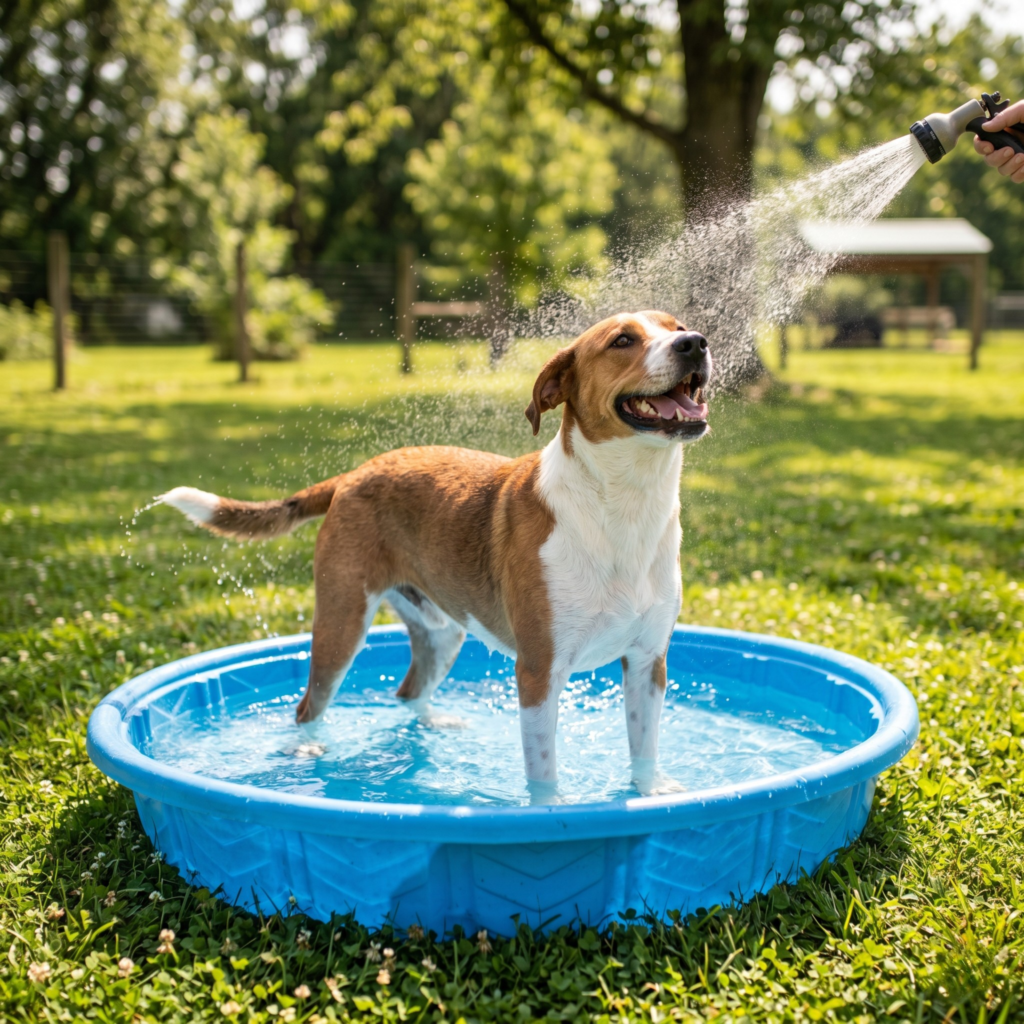
- Cool, Not Cold: Apply cool (not ice-cold) water to their belly, armpits, and paws. Using ice-cold water can cause their blood vessels to constrict, actually trapping the heat inside their organs and causing shock.
- Offer Water: Offer cool drinking water, but do not force them to drink if they are vomiting or unable to stand.
- Call the Vet: Heatstroke is a medical emergency. Even if your pet seems to recover after cooling down, internal damage may have occurred. Seek veterinary care immediately.
Prevention in the Pasture: Protecting Farm Animals
If you have a backyard flock or a pasture full of rescue animals, their environment needs a summer upgrade.
- Mud Wallows for Pigs: Because our resident rescue pigs cannot sweat, they rely on mud to cool their skin and protect themselves from sunburn. A muddy, shaded wallow is an absolute necessity, not a luxury.
- Endless Fresh Water: Water troughs sitting in the sun will quickly become hot and unappealing. Scrub troughs regularly to prevent algae growth and refill them daily with cool, fresh water.
- Ventilation and Shade: Ensure your barns and coops have excellent cross-ventilation. If your pasture lacks natural tree shade, you must provide sturdy, shaded run-ins or heavy-duty tarps for your goats and mini horses.
Safe Toledo Walks: Protecting Your Dog
The timing and location of your summer walks can make all the difference for your canine companion.
- Beat the Heat: Limit walks to the early mornings or late evenings when the sun is low. Avoid strenuous exercise during the hottest parts of the day (typically between 11:00 AM and 4:00 PM).
- The Asphalt Test: Asphalt and concrete can reach blistering temperatures, causing severe, painful burns to your dog’s paw pads. Place the back of your hand flat on the pavement for seven seconds. If it is too hot for your hand, it is too hot for their paws.
- Ditch the Muzzle (If Possible): Dogs cool themselves by panting. If your reactive dog requires a muzzle, ensure it is a properly fitted basket muzzle that allows them to fully open their mouth and pant. Never use a restrictive nylon grooming muzzle on a walk.
The Operation Saves Mission: The Cool Down Crew
Managing the sanctuary during a heatwave is an intense, all-hands-on-deck effort, and it provides a vital learning experience for the at-risk youth and individuals with disabilities in our community outreach programs. During the summer, our participants become our official “Cool Down Crew.” By meticulously scrubbing water troughs, running the hoses to create the perfect pig wallows, and preparing frozen fruit-and-veggie blocks for our dogs and birds, they learn the incredible responsibility of environmental management. It teaches them foresight, the importance of hydration, and how to put the comfort and safety of vulnerable animals before themselves.
Ready to Support Our Summer Safety Efforts?
Keeping our massive, diverse animal family cool takes a village—and a lot of water hoses! If you are ready to bring a new pet into your air-conditioned home, or if you want to support our summer operations, we would love to connect!
- View Our Adoptable Pets to find a furry (or scaled!) friend to spend the summer with.
- Submit a Volunteer Application to join our Cool Down Crew and help us maintain our shaded pastures and fresh water stations.
- Make a Donation to help us purchase heavy-duty fans, kiddie pools, and shade sails for our sanctuary residents.
Disclaimer: All potential adopters are subject to an extensive application and approval process to ensure proper placement and care for our animals. The information provided in our blog is for educational purposes and is not a substitute for professional veterinary advice. Heatstroke is a life-threatening emergency; always consult a licensed veterinarian immediately if you suspect your pet is in distress.