

Bringing a large parrot into your home is like adopting a brilliant, flying toddler who might just outlive you.
While their vibrant feathers and incredible ability to mimic human speech are mesmerizing, macaws and cockatoos require a monumental level of specialized care, patience, and lifelong planning.
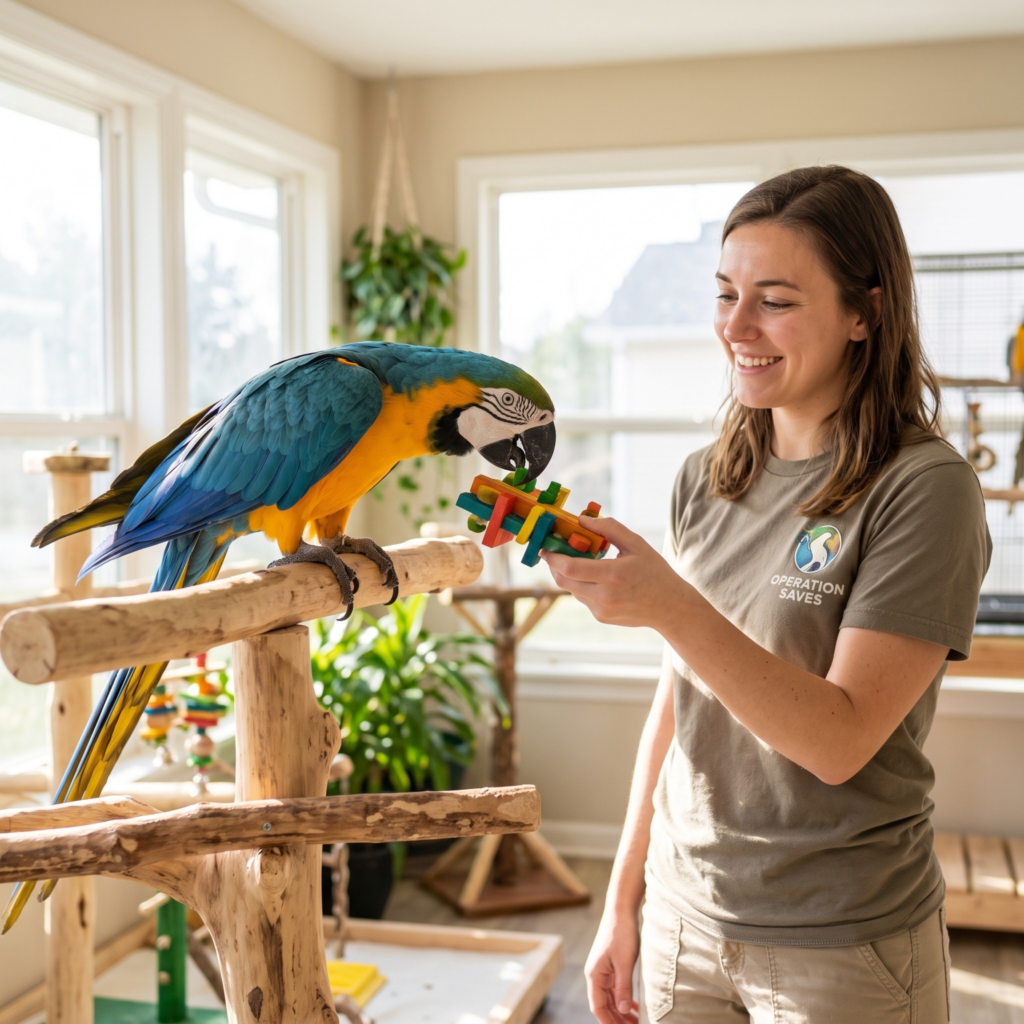
Here at Operation Saves, our Toledo sanctuary is proudly home to a vibrant, highly intelligent flock, including a stunning blue and gold macaw and a charismatic cockatoo. While these birds are incredibly beautiful and captivating to watch, they are also some of the most frequently surrendered exotic animals in the rescue world.
People often purchase large parrots on an impulse, drawn to their striking colors and the novelty of a talking pet. However, the reality of living with a “feathered Einstein” is vastly different from having a domesticated dog or cat. These are highly social, wild animals with complex emotional needs. If you are captivated by these brilliant birds and are considering adopting one, here is our foundational guide to the beautiful, noisy, and demanding reality of large parrot care.
A Multigenerational Commitment
When you adopt a large parrot, you are not just making a commitment for the next few years; you are making a commitment for the rest of your life.
- Incredible Lifespans: Macaws and cockatoos routinely live 50 to 80 years in captivity. When adopting a young or middle-aged bird, it is highly likely that they will outlive you.
- Estate Planning: Responsible parrot owners must literally write their birds into their wills and estate plans. You have to ensure that if something happens to you, your bird has a designated, knowledgeable caregiver ready to step in, so they do not end up bouncing from shelter to shelter.
The Decibel Reality: They Are Loud
If you live in an apartment, a townhome, or have neighbors who prefer total silence, a large parrot is absolutely not the right pet for you.
- Jungle Calls: In the wild, macaws and cockatoos communicate with their flock across miles of dense rainforest canopy. Their natural vocalizations are ear-piercingly loud.
- Attention and Emotion: Cockatoos, in particular, are famous for their screaming. They scream when they are happy, they scream when they are bored, and they scream when they want your attention. You cannot train a parrot to be silent; it goes against their very nature.
Constant Enrichment: Busy Beaks are Happy Beaks
Parrots have the emotional intelligence of a two-year-old human and the problem-solving skills of a primate. A bored bird will quickly become a destructive, depressed, and self-mutilating bird.
- The Need to Destroy: In the wild, parrots spend hours foraging and chewing through tough wood and nuts. In your Northwest Ohio home, you must provide a constant, rotating supply of safe wooden blocks, destructible foraging toys, and puzzle feeders. If you don’t provide things for them to destroy, they will cheerfully destroy your furniture, doorframes, and drywall.
- Out-of-Cage Time: A large cage is only a bedroom. Macaws and cockatoos require massive enclosures (often the size of a walk-in closet) and need several hours of supervised, out-of-cage interaction and flight time with their human flock every single day.
Proper Avian Nutrition
The days of feeding a parrot a bowl of cheap sunflower seeds are long gone. An all-seed diet is a death sentence, leading to severe fatty liver disease and vitamin deficiencies.
- The “Chop” Diet: A healthy adult macaw or cockatoo requires a daily diet consisting of high-quality formulated avian pellets, supplemented heavily with “chop”—a fresh, finely diced mixture of dark leafy greens, colorful vegetables, cooked grains, and a small amount of fruit.
The Operation Saves Mission: Empathy and Enrichment
Caring for our resident macaw and cockatoo is one of the most engaging challenges for the at-risk youth and individuals with disabilities in our community outreach programs. These birds demand respect and are excellent judges of character. Our program participants learn how to read subtle avian body language—like pinned eyes or flared neck feathers—to understand when a bird wants to interact and when they need space. Furthermore, the daily task of building intricate foraging toys from safe, recycled materials allows our participants to flex their creativity while providing vital mental stimulation for our brilliant feathered residents.
Ready to Join the Flock?
Adopting a large parrot is a massive lifestyle change, but earning the trust and affection of a feathered Einstein is one of the most profoundly rewarding experiences in the world. If you have the space, the earplugs, and the dedication, we would love to connect!
- View Our Adoptable Exotic Pets to see if we have any large birds currently looking for a specialized, forever flock.
- Submit a Volunteer Application to help our team chop daily fresh veggies and build destructible wooden toys for our sanctuary birds.
- Make a Donation to help us purchase heavy-duty cages, expensive avian pellets, and the specialized veterinary care these long-lived animals require.
Disclaimer: All potential adopters are subject to an extensive application and approval process to ensure proper placement and care for our animals. The information provided in our blog is for educational purposes and is not a substitute for professional veterinary advice. Large parrots require specialized, ongoing care from a certified avian veterinarian.