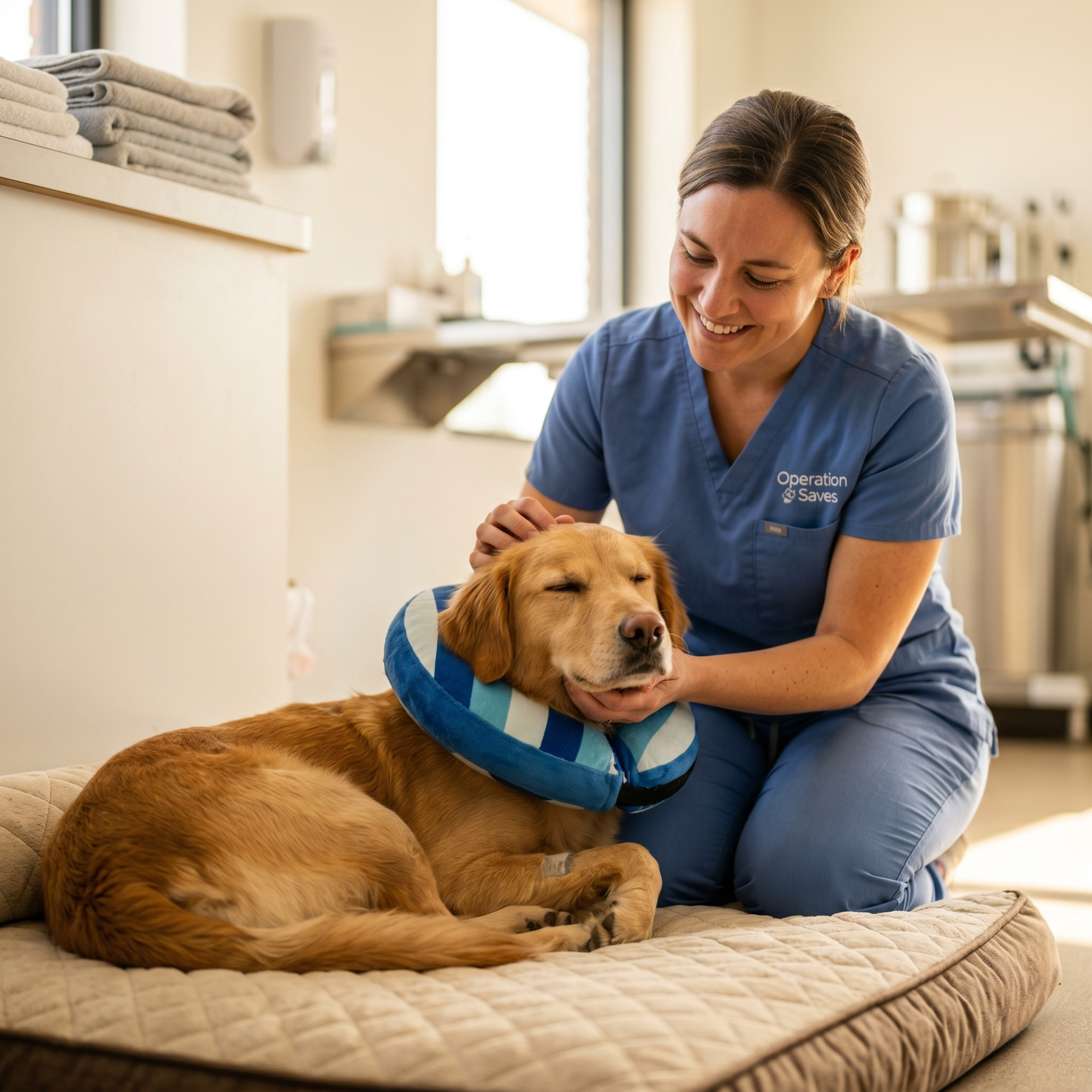


Welcoming a traumatized rescue dog into your home is a profound act of love that requires patience, observation, and a willingness to listen without words.
By learning to read their subtle body language, you can bridge the gap of fear and help them build the confidence they need to thrive.
Here at Operation Saves, our Toledo sanctuary takes in animals from all walks of life, including dogs that have experienced severe neglect, under-socialization, or abuse. When these dogs arrive, they don’t speak English; they speak through their bodies. A wagging tail doesn’t always mean “happy,” and a dog that is perfectly still isn’t necessarily “calm.”
Understanding how a traumatized dog communicates is the first step in earning their trust. Whether you have just adopted a shy dog or are working through the decompression phase, here is a guide to translating their most common stress signals.
The “Whale Eye” and Lip Licking: Early Signs of Stress
When a dog is nervous, they will often display subtle behaviors long before they growl or hide.
- Whale Eye: If a dog turns their head slightly away but keeps their eyes fixed on you or an object, revealing the white portion (sclera) of their eyes, they are feeling highly anxious and cornered.
- Lip Licking & Yawning: If your dog is repeatedly licking their lips when no food is around, or yawning when they aren’t tired, these are “displacement behaviors.” Much like a human nervously tapping their foot, a dog does this to self-soothe in stressful situations.
The Tucked Tail and Pinned Ears: The Fear Response
This is often what people picture when they think of a scared rescue dog.
- Tail Position: A dog’s tail is a barometer for their emotional state. A tightly tucked tail—often pulled flat against the belly—indicates extreme fear and a desire to make themselves as small as possible.
- Pinned Ears: While relaxed dogs have ears that naturally rest forward or to the side (depending on the breed), a fearful dog will pin their ears flat against the back of their head to protect themselves.
The “Freeze”: When Overwhelm Takes Over
Sometimes, an adopter will take their new rescue dog for a walk in a busy Toledo neighborhood, and the dog will simply stop moving. They won’t take a treat, they won’t look around, and they won’t walk forward. This isn’t stubbornness; it’s a “freeze” response. When a traumatized dog is flooded with too much sensory information, their brain essentially shuts down to cope. If your dog freezes, do not drag them. Patiently wait, block them from the overwhelming stimulus if possible, and gently encourage them to move to a quieter space.
The Operation Saves Approach: Empathy in Action
Decoding canine body language is a cornerstone of our work at the sanctuary. It’s also one of the most powerful skills we teach the at-risk youth and individuals with disabilities in our community outreach programs. By learning to be quiet, observant, and respectful of a fearful dog’s boundaries, our participants develop profound empathy and emotional regulation. When a youth volunteer successfully reads a dog’s stress signals, gives them space, and is eventually rewarded with a soft, genuine tail wag, it builds incredible confidence on both ends of the leash.
How You Can Help Your Dog Decompress
If you are seeing signs of fear, your job is to become a source of safety.
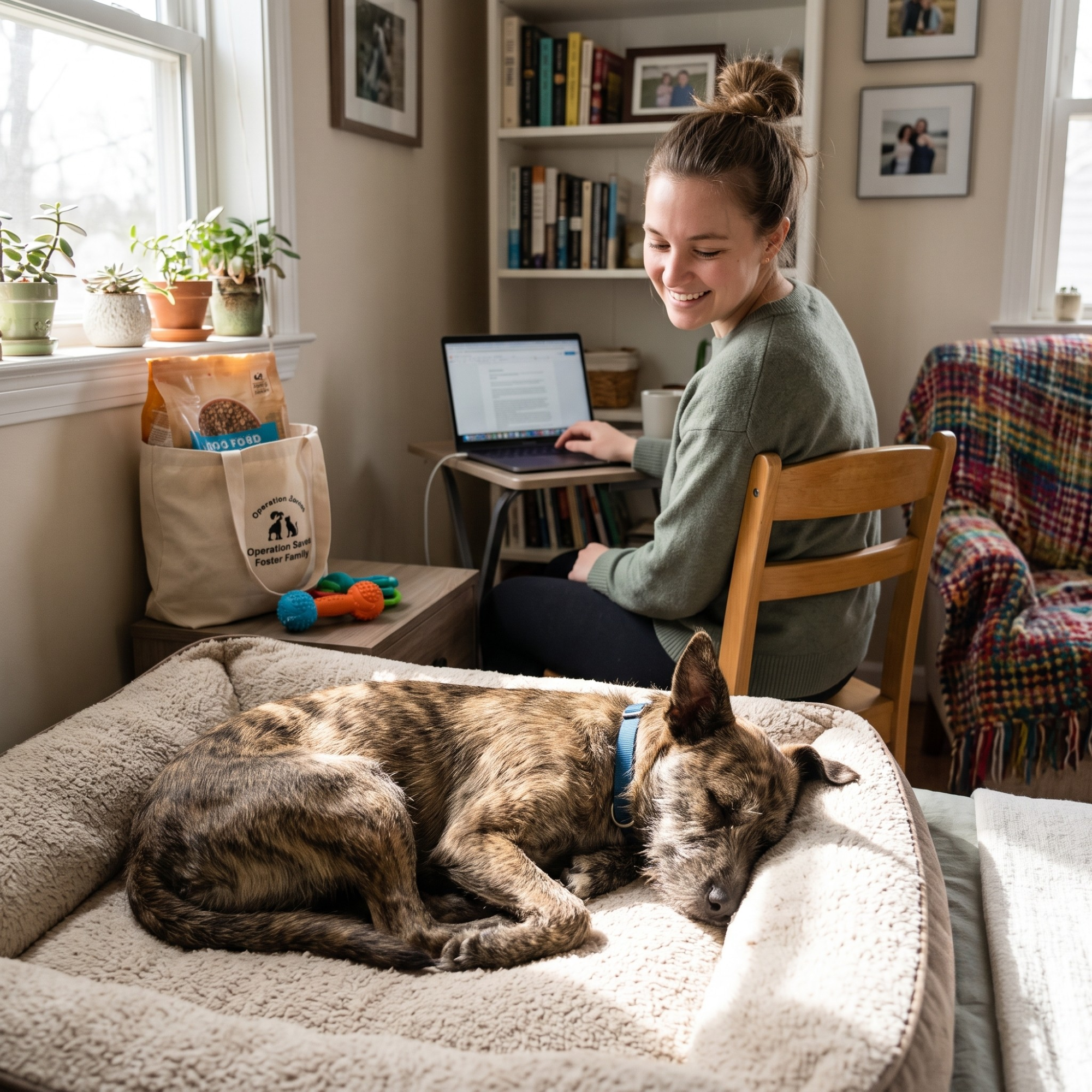
- Give Them a Safe Zone: Create a quiet, enclosed space (like a covered crate in a low-traffic room) where they are never disturbed by people or other pets.
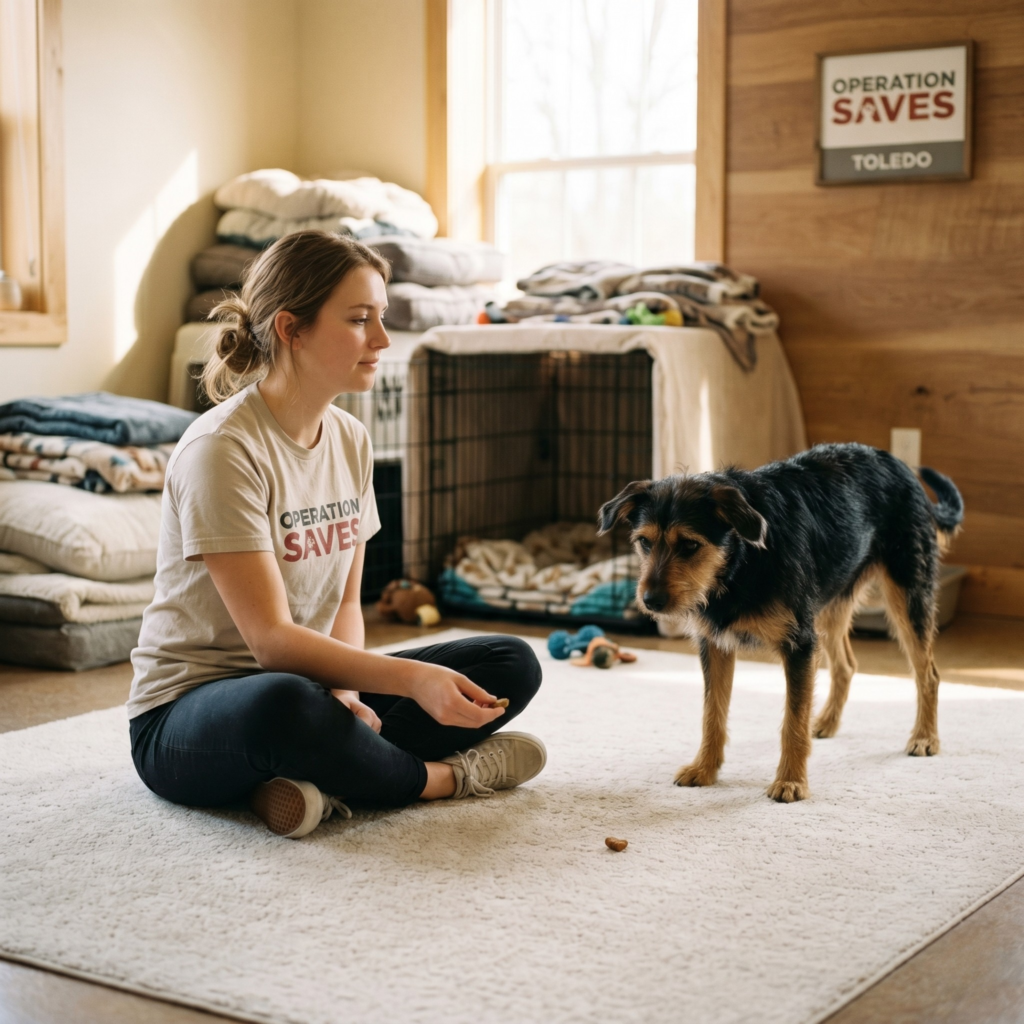
- Avert Your Gaze: Direct eye contact can be incredibly threatening to a traumatized dog. Look at them softly from the side, or sit quietly near them while reading a book to show you are not a threat.
- Let Them Come to You: Never force physical affection. Offer high-value treats by tossing them nearby, gradually letting the dog close the distance on their own terms.
Ready to Change a Life?
Patience is the greatest gift you can give a rescue dog. If you are ready to open your home to an animal in need, or if you want to support the vital rehabilitation work happening at our facility, we need you!
- View Our Adoptable Dogs to find a companion waiting for a second chance.
- Submit an Adoption Application to learn these body language skills hands-on at our sanctuary.
- Make a Donation to sponsor the rehabilitation, training, and care of our most vulnerable arrivals.
Disclaimer: All potential adopters are subject to an extensive application and approval process to ensure proper placement and care for our animals. The information provided in our blog is for educational purposes and is not a substitute for professional veterinary or certified dog training advice. If your pet is showing signs of severe aggression or fear, please consult a certified canine behaviorist.