

Welcoming a reptile into your life offers a fascinating and rewarding pet experience, but these incredibly intelligent animals require highly specialized environments to survive and thrive.
By understanding the precise needs for temperature gradients, UVB lighting, and complex diets, you can create a beautiful, enriching habitat for a rescue bearded dragon or tegu right here in Northwest Ohio.
Here at Operation Saves, our Toledo sanctuary is a haven for more than just dogs, cats, and farm animals. We also take in a fascinating array of exotic reptiles. Often, these incredible, cold-blooded companions—like bearded dragons and tegus—arrive at our facility because well-meaning owners purchased them as tiny, inexpensive babies at a pet store, only to be entirely overwhelmed by how large they grow and how complex their husbandry truly is.
Reptiles are not “set it and forget it” pets. They are highly observant and, in the case of tegus, remarkably intelligent animals capable of being target-trained and forming strong bonds with their caretakers. If you are fascinated by these modern-day dinosaurs and are considering adopting one, here is our foundational guide to the specialized care they require.
The Heat is On: Mastering the Temperature Gradient
Because reptiles are ectothermic (cold-blooded), they cannot regulate their own body temperature internally. They rely entirely on their environment to digest food, fight off illness, and stay active.
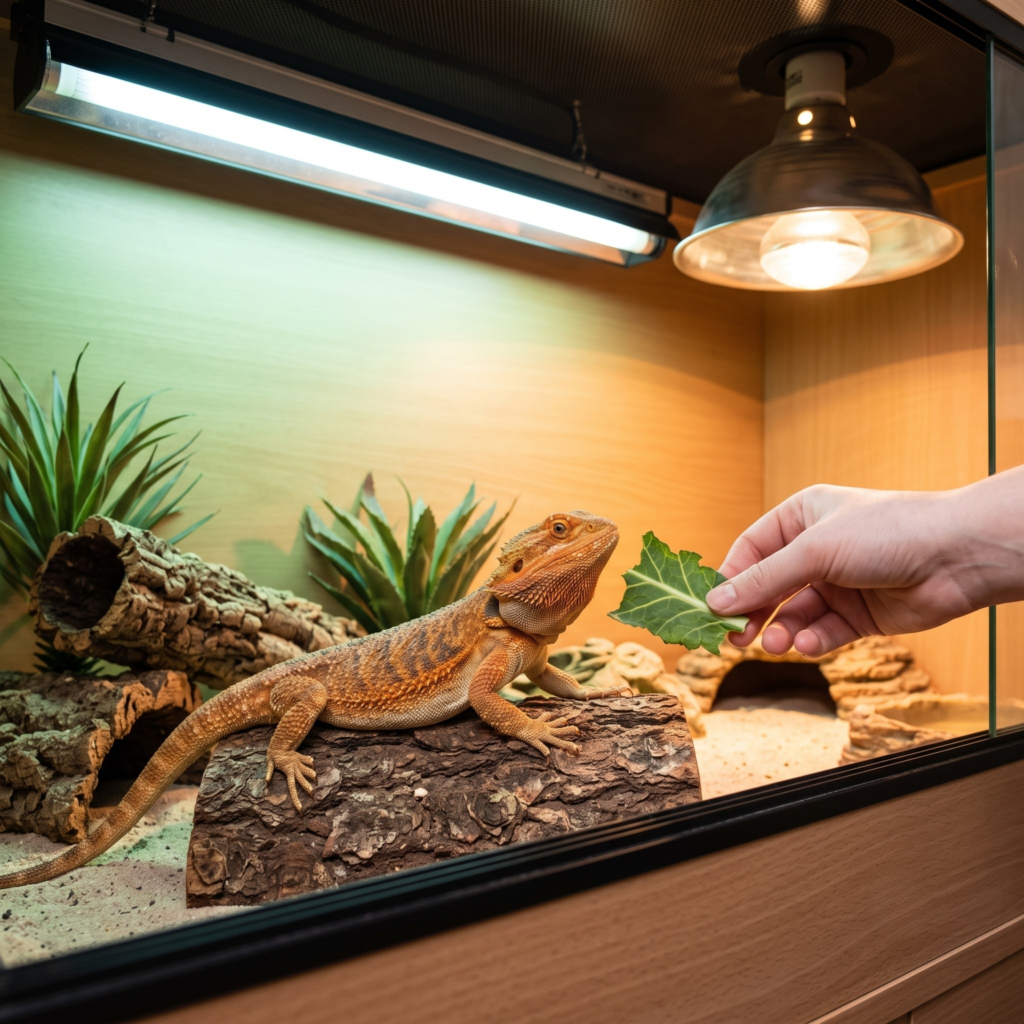
- The Gradient: An enclosure cannot be just one uniform temperature. It must have a hot “basking side” and a cooler “ambient side” so the animal can move back and forth to regulate its temperature throughout the day.
- Basking Temps: A bearded dragon requires a very hot, localized basking spot of around 100°F to 105°F. Tegus also require high basking temperatures, often ranging from 115°F to 130°F on their basking platform.
- Ditch the Heat Rocks: Never use electric heat rocks. Reptiles do not sense heat well on their bellies and can suffer severe, life-threatening burns. Always provide heat from an overhead basking bulb.
Let There Be (UVB) Light: Preventing MBD
Perhaps the most misunderstood aspect of reptile care is lighting. Without proper lighting, a reptile’s bones will literally disintegrate.
- The Importance of UVB: Both bearded dragons and tegus require high-output, linear UVB fluorescent tube lighting covering about half to two-thirds of their enclosure. Without UVB, they cannot synthesize Vitamin D3, which means they cannot absorb calcium.
- Metabolic Bone Disease (MBD): A lack of UVB and calcium leads to MBD, a tragic, painful, and often fatal condition that causes their bones to soften, warp, and break.
- Replace Bulbs Regularly: UVB bulbs degrade over time, even if they still emit visible light. You must replace linear UVB bulbs every 6 to 12 months to ensure your reptile is actually getting the radiation they need.
Dining Like a Dinosaur: Complex Dietary Needs
Feeding these reptiles involves a lot more than just dropping a few crickets into a tank.
- The Bearded Dragon Diet: Bearded dragons are omnivores. While babies eat mostly insects, an adult rescue dragon requires a diet that is 80% fresh, dark leafy greens (like collards, mustard greens, and squash) and 20% live, gut-loaded insects (like dubia roaches or crickets).
- The Tegu Diet: Tegus are massive, voracious omnivores (and some species lean heavily carnivorous). Their diet is incredibly varied and can include whole prey (like frozen/thawed rodents or chicks), cooked eggs, ground turkey, fish, and a variety of safe fruits and vegetables.
- Supplementation: Regardless of the species, their food must be properly dusted with a high-quality calcium and multivitamin powder on a strict schedule.
Space to Roam: Sizing Up the Enclosure
This is the number one reason reptiles are surrendered to our sanctuary: people underestimate how much room they need.
- Bearded Dragons: A standard glass fish tank is not suitable for an adult bearded dragon. They require a minimum enclosure size of 4x2x2 feet to ensure proper heat gradients and roaming space.
- Tegus: Tegus can grow to be 4 to 5 feet long! An adult tegu requires a massive, custom-built enclosure. The absolute minimum footprint is 8x4x4 feet. Many owners end up dedicating an entire spare bedroom or building large, insulated outdoor enclosures for the warm Toledo summers.
The Operation Saves Mission: Empathy for the Misunderstood
Reptiles are often misunderstood, making them incredible ambassadors for the at-risk youth and individuals with disabilities in our community outreach programs. Working with an animal that doesn’t show affection in traditional, furry ways challenges our participants to look deeper. By meticulously logging terrarium temperatures, safely handling live feeder insects, and preparing beautifully complex salads for our bearded dragons, our community members learn profound attention to detail. They learn that every living creature, scales and all, deserves a safe, meticulously maintained environment and a caretaker who respects their unique needs.
Ready to Scale Up Your Family?
If you have the space, the proper lighting setup, and a fascination for these incredible creatures, a rescue reptile might be your perfect match!
- View Our Adoptable Exotic Pets to see the incredible reptiles currently waiting for a knowledgeable home.
- Submit an Adoption Application to start the conversation with our exotic animal care team.
- Make a Donation to help us purchase expensive UVB bulbs, custom terrariums, and fresh produce for our sanctuary’s cold-blooded residents.
Disclaimer: All potential adopters are subject to an extensive application and approval process to ensure proper placement and care for our animals. The information provided in our blog is for educational purposes and is not a substitute for professional veterinary advice. Reptiles require specialized care from a licensed exotic veterinarian.