

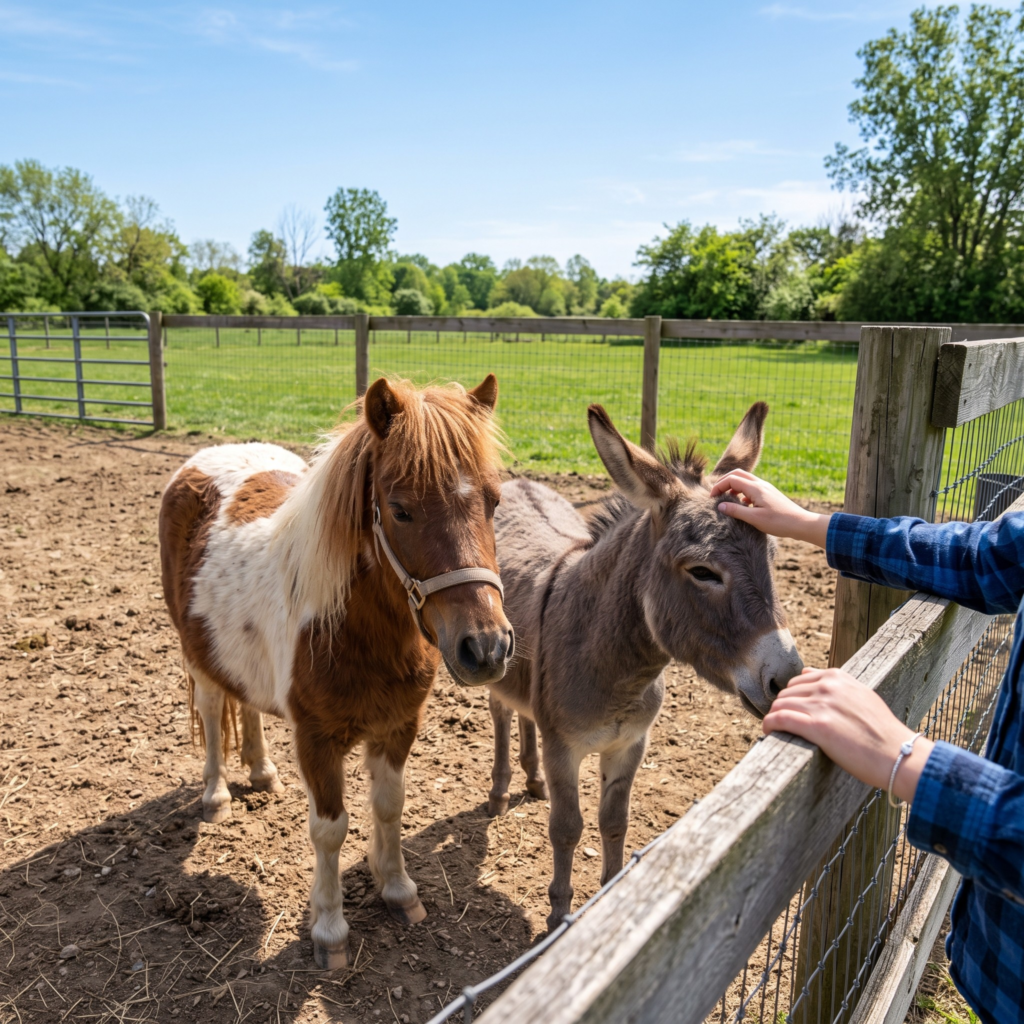
Adopting a miniature horse or donkey brings an enormous amount of personality to your hobby farm, but their pint-sized stature requires highly specialized care.
From strict diet management to predator-proof fencing, understanding the unique needs of these incredible equines will ensure they live long, healthy lives right here in Northwest Ohio.
Here at Operation Saves, our Toledo-area farm sanctuary is home to a wonderfully diverse herd, including some incredibly charismatic miniature horses and donkeys. While their small size makes them wonderfully approachable, a common misconception is that a “mini” is simply a horse that needs less food and space. In reality, miniature equines—and especially donkeys—have remarkably different metabolic and physical needs than their full-sized counterparts.
Often, these animals arrive at our rescue severely overweight, suffering from painful hoof issues, or poorly socialized. If you have the pasture space and are considering adding a mighty mini to your family, here is our foundational guide to keeping them healthy, sound, and secure.
Feeding the “Easy Keeper”: Managing Weight and Founder
Miniature horses and donkeys are notorious “easy keepers.” They evolved to survive on sparse, arid forage, which means the lush, green spring pastures of Northwest Ohio can actually be incredibly dangerous for them.
- The Danger of Rich Grass: Too much sugar and starch from rich grass can trigger a life-threatening, crippling hoof condition called laminitis (often leading to founder).
- Dry Lots and Grazing Muzzles: To keep them safe during the spring and summer, minis often need to be kept in a “dry lot” (a dirt paddock with no grass) or wear a specialized grazing muzzle while out to pasture. This limits their intake while still allowing them to socialize and exercise.
- Low-Sugar Forage: The bulk of their diet should be a high-quality, low-sugar grass hay. Avoid rich alfalfa hay, sweet feeds, or sugary treats. A plain, ration-balancing pellet and an equine mineral block are usually all they need to thrive.
Hoof Care: No Hoof, No Horse (or Donkey!)
Just like full-sized horses, miniature equines require meticulous, routine hoof care to stay comfortable and sound.
- Routine Trimming: Miniature hooves grow quickly and must be trimmed by a qualified, professional farrier every 6 to 8 weeks. Neglected hooves will curl upwards, causing permanent joint damage and immense pain.
- The Donkey Difference: A donkey’s hoof is structured slightly differently than a horse’s—it is more upright and deeply cupped. It is crucial to use a farrier who specifically understands donkey hoof anatomy.
- Mud Management: Our wet Ohio springs can wreak havoc on tiny hooves. Always ensure your minis have access to dry, elevated ground to prevent a painful bacterial infection called thrush.
Fencing and Shelter: Keeping the Herd Secure
When fencing for miniature equines, you have to think about keeping them in, but also keeping predators out.
- No-Climb Fencing: A standard three-board horse fence often leaves gaps large enough for a mini to slip under. We highly recommend “no-climb” woven wire horse fencing. This prevents them from escaping and protects them from neighborhood roaming dogs or coyotes, which pose a significant threat to small equines.
- Draft-Free Run-Ins: Donkeys, in particular, do not have the same waterproof, protective oils in their coats as horses do. When it rains or snows in Toledo, moisture soaks right down to their skin. A sturdy, draft-free, three-sided run-in shed packed with dry bedding is an absolute requirement to keep them warm and dry.
The Operation Saves Mission: Big Empathy for Small Equines
Working with our miniature horses and donkeys provides an incredible, confidence-building experience for the at-risk youth and individuals with disabilities in our community outreach programs. Because full-sized horses can be incredibly intimidating, our minis act as the perfect, approachable ambassadors. When our program participants learn to gently pick out a tiny hoof, carefully weigh out specialized hay rations, or lead a donkey through an obstacle course, they are building vital communication skills and emotional regulation. They learn that true leadership isn’t about physical size or force; it is about building trust, respecting boundaries, and providing careful, attentive care.
Ready to Welcome a Mini to Your Pasture?
Miniature horses and donkeys are highly social herd animals and must be kept with an equine companion. If you have the proper setup and are ready for the rewarding commitment of miniature equine care, we’d love to connect!
- View Our Adoptable Farm Animals to see the incredible minis and donkeys currently looking for a loving home.
- Submit an Adoption Application to start the conversation with our farm sanctuary team.
- Make a Donation to help us cover the ongoing costs of specialized farrier visits, low-sugar hay, and dental care for our resident herd.
Disclaimer: All potential adopters are subject to an extensive application and approval process to ensure proper placement and care for our animals. The information provided in our blog is for educational purposes and is not a substitute for professional veterinary advice. Miniature equines require specialized care from a licensed large animal or equine veterinarian and a certified farrier.